Dust-covered books don’t just look neglected, they harbor allergens, mold spores, and dirt that can damage bindings and pages over time. Whether someone inherited a vintage collection or just realized their shelves haven’t been cleaned since moving in, knowing how to properly clean books protects both the investment and indoor air quality. Unlike cleaning kitchen counters, book cleaning requires specific techniques to avoid tearing pages, damaging spines, or spreading moisture into porous paper. This guide walks through everything needed to safely clean, refresh, and maintain a home library without professional restoration services.
Table of Contents
ToggleKey Takeaways
- Proper cleaning house books prevents allergens, mold spores, and paper degradation that damage bindings and degrade indoor air quality over time.
- Using the right supplies—microfiber cloths, soft brushes, and a HEPA vacuum—protects book bindings and pages, while harsh cleaners and paper towels cause permanent damage.
- Hardcover and paperback books require different cleaning approaches; hardcovers tolerate more aggressive cleaning while paperbacks demand a lighter touch to avoid warping and creasing.
- Address mold, stains, and odors promptly with safe methods like 70% isopropyl alcohol for mold, cornstarch for grease, and baking soda for odors to prevent costly restoration projects.
- Maintain your collection by shelving books upright away from sunlight and exterior walls, dusting every 1–2 months, and keeping humidity between 30–50% to extend the life of your library.
Why Cleaning Your Books Matters for Your Home and Health
Books accumulate more than dust. Paper naturally absorbs moisture, odors, and airborne particles, making neglected shelves a reservoir for allergens like dust mites and mold spores. A study cited in home maintenance research found that household dust can contain dozens of allergen types, many concentrated on horizontal surfaces like book tops.
For homeowners with respiratory sensitivities, dirty books can trigger reactions similar to dusty HVAC vents. Beyond health concerns, accumulated grime accelerates paper degradation. The acids in dust and environmental pollutants break down cellulose fibers, causing yellowing and brittleness.
Moisture-related damage is particularly destructive. Books stored in humid basements or near exterior walls can develop mildew, which spreads through entire collections if left unchecked. Regular cleaning catches these issues early, before a $30 book becomes a restoration project costing hundreds.
Finally, clean books simply last longer. Proper maintenance preserves bindings, prevents foxing (those reddish-brown spots on old paper), and keeps valuable first editions or family heirlooms readable for future generations.
Essential Supplies for Cleaning Different Types of Books
Gathering the right tools before starting prevents mid-project trips to the hardware store and reduces the risk of damaging delicate materials.
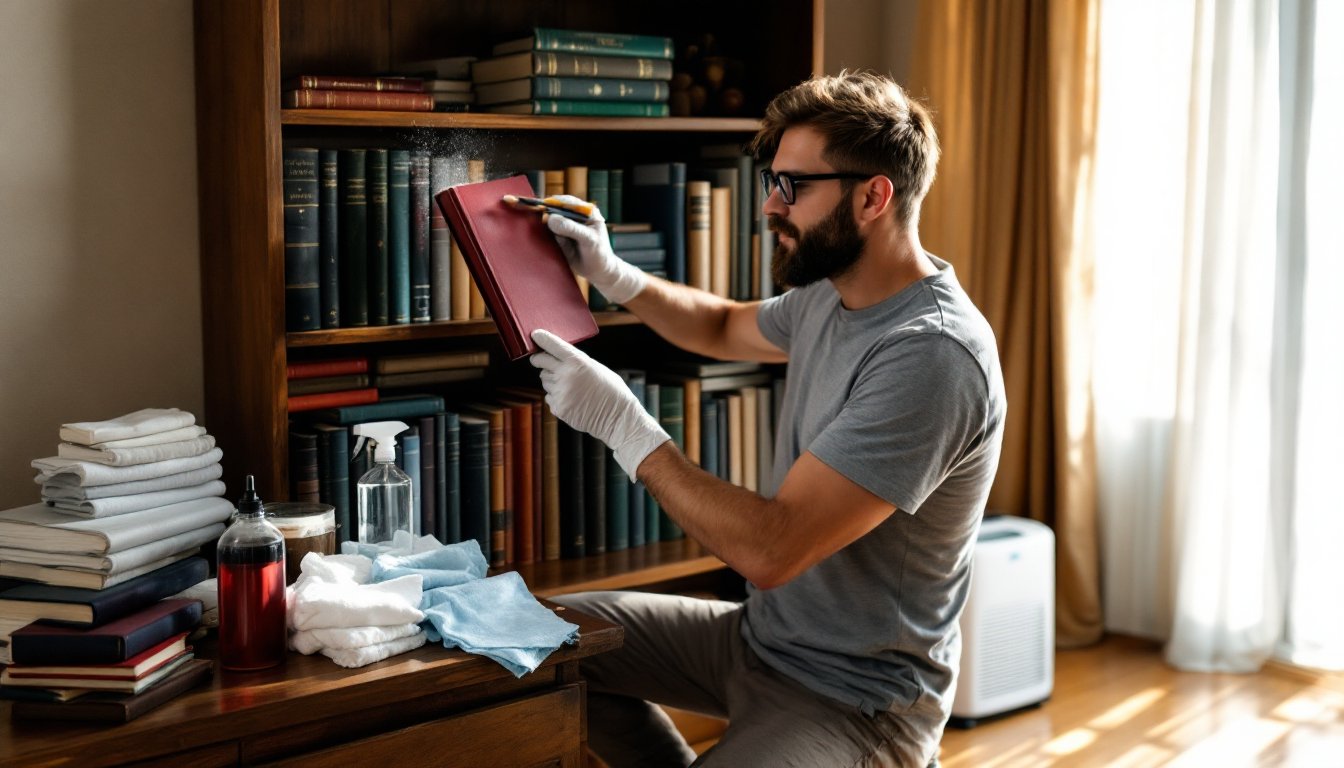
Basic cleaning kit:
- Microfiber cloths (at least 3–4 clean ones)
- Soft-bristle paintbrush or makeup brush (1–2 inches wide)
- White vinyl eraser (like Staedtler Mars Plastic)
- Vacuum with brush attachment (HEPA filter preferred)
- Nitrile gloves (especially for moldy books)
- Document cleaning pad (grated eraser powder for advanced cleaning)
For specialized issues:
- Unscented baby wipes or distilled water with mild dish soap (minimal moisture only)
- Rubbing alcohol (70% isopropyl) for mold spots
- Baking soda or activated charcoal for odor absorption
- Freezer bags (gallon-size, for mold isolation)
Safety gear:
- Disposable face mask (N95 if dealing with mold)
- Safety glasses (when vacuuming to prevent dust in eyes)
Avoid using furniture polish, all-purpose cleaners, or anything with oils or solvents. These penetrate paper fibers and cause permanent staining. Similarly, skip paper towels, they’re too abrasive and leave lint.
For large collections, consider setting up a dedicated cleaning station with good lighting and a clean, dry workspace. A folding table covered with a clean drop cloth works well.
Step-by-Step Guide to Cleaning Hardcover Books
Hardcover books withstand more aggressive cleaning than paperbacks, but still require a careful approach to avoid damaging dust jackets and bindings.
1. Remove the dust jacket. Slide it off completely and set it aside. Clean the jacket separately using a dry microfiber cloth, wiping gently in one direction.
2. Vacuum loose dust. Hold the book firmly closed and use the vacuum’s brush attachment on low suction. Run the brush along the top edge (the part that faces out on a shelf) to remove surface dust. Don’t vacuum an open book, suction can tear pages.
3. Brush the spine and covers. With the book still closed, use a soft-bristle brush to sweep dust from the spine, front, and back covers. Brush away from the spine to avoid pushing debris into the binding.
4. Clean the covers. Dampen (not soak) a microfiber cloth with distilled water. Wring it out thoroughly, it should be barely moist. Wipe the front and back covers in gentle strokes. For cloth-bound covers, skip water and use a dry brush or document cleaning pad instead.
5. Address the page edges. With the book closed, use the white vinyl eraser on the top, bottom, and fore-edge (the side opposite the spine) to remove fingerprints and grime. Brush away eraser crumbs with the soft brush.
6. Fan and air-dry. Stand the book upright and fan the pages briefly to release trapped dust. Leave it open in a dry, well-ventilated area for 15–20 minutes before reshelving.
7. Reattach the dust jacket. Once the book is completely dry, slide the jacket back on.
For leather-bound books, apply a leather conditioner (not shoe polish) sparingly after cleaning, following the product’s instructions. Test on an inconspicuous spot first.
How to Clean Paperback Books Without Causing Damage
Paperbacks demand a lighter touch. Their covers are printed paper laminated to thin cardboard, and they lack the rigid structure of hardcovers.
1. Dust with a dry cloth. Gently wipe the cover and spine with a clean, dry microfiber cloth. Don’t press hard, paperback covers can crease easily.
2. Use minimal vacuuming. If the book is very dusty, hold it closed and use the vacuum brush on the lowest suction setting, barely touching the top edge.
3. Erase surface marks. For scuffs or light soil on the cover, use a white vinyl eraser with gentle pressure. The organization strategies often featured in lifestyle guides recommend keeping books in good condition to maximize shelf appeal.
4. Avoid moisture. Water can cause paperback covers to warp and pages to ripple. If a spot must be cleaned, use a barely damp cloth on the cover only, never the spine or pages.
5. Address page yellowing. Yellowed pages are usually due to lignin oxidation (a natural aging process). There’s no safe home remedy to reverse this. Accept it as character or consult a professional book restorer for valuable editions.
6. Flatten warped pages. If pages have curled from humidity, place the closed book under a stack of heavy books (10–15 pounds total) for 24–48 hours in a dry area.
Paperbacks are fragile and disposable by design. If a $10 mass-market paperback is heavily damaged, replacement may be more practical than extensive cleaning.
Removing Common Stains, Odors, and Mold from Books
Stains:
For grease or fingerprints, sprinkle a small amount of cornstarch on the spot, let it sit for 1–2 hours to absorb the oil, then brush it off gently. For ink marks, a white vinyl eraser often works. Do not use rubbing alcohol or solvents on printed pages, they can smear ink or dissolve bindings.
Water stains leave tide marks as minerals dry. If caught immediately, blot (don’t rub) with a clean cloth, then place a paper towel between affected pages and weigh the book flat until dry. Old water stains are usually permanent.
Odors:
Musty smells often come from mildew or storage in damp areas. Place the book in a cardboard box with an open container of baking soda or activated charcoal. Seal the box and leave it for 1–2 weeks, checking periodically. Don’t use dryer sheets or perfumed products, they mask odors but don’t eliminate them.
For severe smells, some professionals recommend freezing. Seal the book in a freezer bag, freeze for 48 hours, then thaw at room temperature. This kills mold spores and bacteria causing odors. But, condensation during thawing can damage pages, so use this only as a last resort.
Mold:
Safety first: Wear nitrile gloves and an N95 mask. Work outdoors or in a well-ventilated area. Mold spores are a respiratory hazard.
- Isolate the book. Place it in a sealed freezer bag to prevent spores from spreading to other books.
- Brush off surface mold. Once the book is outside or in a ventilated area, gently brush mold off with a soft brush. Dispose of the brush afterward.
- Treat with alcohol. Dampen a cloth with 70% isopropyl alcohol and gently dab (don’t rub) moldy areas. Alcohol kills mold and evaporates quickly, minimizing moisture damage.
- Dry thoroughly. Stand the book upright with pages fanned in a dry, sunny area for several hours. UV light helps kill remaining spores.
If mold has penetrated deep into pages or caused staining, the book may not be salvageable. For rare or valuable books, consult a professional conservator before attempting DIY mold removal.
Organizing and Maintaining Your Book Collection After Cleaning
Clean books deserve clean shelves. Before reshelving, vacuum the shelving unit and wipe surfaces with a damp cloth. If shelves are in a basement or humid area, consider adding a small dehumidifier. Ideal relative humidity for book storage is 30–50%: above 60% invites mold.
Shelving best practices:
- Stand books upright. Leaning stresses spines. Use bookends to keep rows stable.
- Don’t overstuff shelves. Books should slide out easily without forcing. Tight packing damages bindings.
- Keep shelves away from direct sunlight. UV light fades covers and degrades paper.
- Avoid exterior walls. They’re prone to temperature swings and moisture infiltration.
Ongoing maintenance:
Dust shelves every 1–2 months using a microfiber cloth or vacuum brush attachment. Tackle the book tops at the same time, it takes an extra five minutes and prevents heavy buildup. The cleaning techniques recommended by home experts emphasize regular light cleaning over infrequent deep cleans.
For valuable or antique books, store them horizontally (spine facing out) to prevent spine stress. Wrap them in acid-free tissue paper if they’ll be stored long-term.
Rotate your collection. If certain books are rarely read, consider storing them in archival boxes in a climate-controlled closet. This frees up shelf space and reduces dust exposure.
Monitor for pests. Silverfish and booklice feed on paper and bindings. If small insects appear, isolate affected books, vacuum thoroughly, and reduce humidity. Severe infestations may require professional pest control.
Cleaning a home library is a weekend project, but maintaining it is an ongoing habit. A quick monthly dusting and vigilance for moisture issues keep books healthy and shelves looking sharp.
Conclusion
Cleaning house books isn’t just about appearance, it’s about preserving investments, protecting health, and extending the life of a collection. With the right supplies and techniques, most homeowners can tackle routine cleaning without professional help. Regular dusting, proper storage, and quick attention to stains or odors prevent small issues from becoming expensive restoration projects. A well-maintained library is a functional part of the home, not just decoration.