Choosing the right cleaning products can mean the difference between wiping the same counter three times or getting it done in one pass. With hundreds of sprays, powders, and concentrates lining the shelves, it’s easy to end up with a cabinet full of single-purpose bottles that barely work. The best cleaning products balance power, versatility, and safety, they cut through grime without damaging surfaces or requiring a hazmat suit to use. This guide breaks down what actually works for kitchens, bathrooms, floors, and general cleaning, so homeowners can stock up smart and spend less time scrubbing.
Table of Contents
ToggleKey Takeaways
- The best house cleaning products balance power, versatility, and safety by matching pH levels to surface types—alkaline for grease, acidic for mineral deposits, and neutral for sensitive surfaces.
- Effective cleaning requires understanding surfactants and dwell time; letting a product sit for 30 seconds to 2 minutes before wiping ensures it actually works instead of just smearing dirt around.
- All-purpose cleaners with neutral pH handle multiple surfaces safely, and pairing them with microfiber cloths delivers superior results compared to paper towels while reducing plastic waste.
- Match floor cleaners to your specific flooring type—hardwood needs pH-neutral formulas, tile tolerates alkaline cleaners, and natural stone requires specialized stone-specific products to avoid damage.
- Natural alternatives like vinegar, baking soda, and hydrogen peroxide work effectively for many household tasks when used correctly, though they often require longer dwell times or more scrubbing effort than commercial products.
What Makes a Cleaning Product Truly Effective?
An effective cleaner does three things: it dissolves or suspends dirt, rinses away cleanly, and doesn’t leave behind residue or damage. pH matters, alkaline cleaners (pH 8-14) break down grease and organic matter, making them ideal for kitchens. Acidic cleaners (pH 1-6) tackle mineral deposits, soap scum, and rust, which is why they dominate bathroom formulas. Neutral cleaners (pH 7) work for routine maintenance on sensitive surfaces like sealed wood or natural stone.
Surfactants are the workhorses. These compounds lower water’s surface tension, letting it penetrate grime and lift it off surfaces. Look for products listing surfactants like alkyl polyglucosides or ethoxylated alcohols if you’re reading labels.
Concentration and dwell time also count. A cleaner rated at 10% active ingredients won’t outperform one at 5% if you’re not letting it sit long enough to work. Most labels recommend 30 seconds to 2 minutes of contact time before wiping. Skipping that step is why people think a product “doesn’t work.”
Finally, substrate compatibility is non-negotiable. Using an ammonia-based glass cleaner on granite will dull the finish. A bleach spray on stainless steel causes pitting. Always match the product to the material, or stick with pH-neutral all-purpose formulas when in doubt.
Top All-Purpose Cleaners for Every Surface
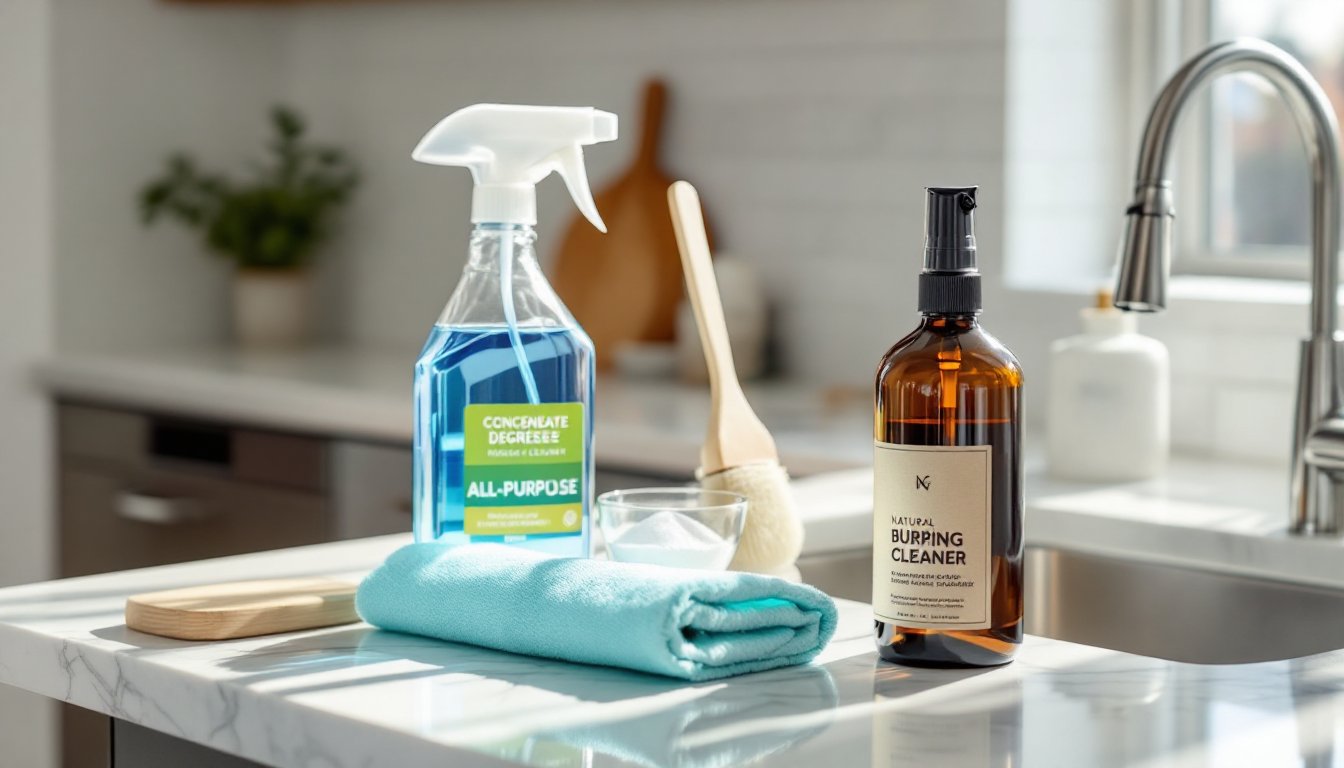
All-purpose cleaners (APCs) are the duct tape of housekeeping, they handle counters, appliances, baseboards, and most hard surfaces without switching bottles. The best ones use a balanced surfactant blend that cuts light grease and dust without streaking.
Concentrate formulas like Simple Green or Mean Green offer the best value. A 1:10 dilution handles everyday messes: full strength tackles heavier buildup. They’re also refillable, cutting down on plastic waste.
For daily use, spray-bottle APCs with neutral pH (around 7) work on sealed wood, laminate, tile, and painted surfaces. Avoid anything with bleach or ammonia if you’re cleaning multiple materials in one pass, those additives limit where you can safely spray.
Microfiber cloths paired with any decent APC outperform paper towels by a wide margin. The fiber structure mechanically lifts dirt, so you’re not just smearing it around. Rinse and reuse them: a good microfiber lasts hundreds of washes.
One caution: “disinfecting” all-purpose cleaners need a longer dwell time, often 5 to 10 minutes, to actually kill pathogens. If you’re just wiping down a counter, you’re cleaning, not disinfecting. That’s fine for most tasks, but it matters if someone in the house is immunocompromised or you’re dealing with raw meat prep areas.
Best Kitchen Cleaning Essentials
Kitchens demand grease-cutting power. Alkaline degreasers are the go-to, think products with sodium hydroxide or potassium hydroxide listed. These work on range hoods, stovetops, and the film that builds up on cabinets near the stove.
For routine counter cleaning, a mild dish soap solution (a few drops in a spray bottle of warm water) handles most spills without harsh chemicals. It’s safe on granite, quartz, butcher block, and laminate. Dish soap is already formulated to emulsify fats, so it’s naturally suited to kitchen messes.
Stainless steel cleaners are worth keeping if you have appliances. These usually contain mineral oil or a light petroleum distillate that polishes and leaves a protective layer. Wipe with the grain to avoid streaks. White vinegar works in a pinch but can leave water spots if not buffed dry.
For baked-on oven grime, caustic oven cleaners (lye-based) are effective but require serious ventilation and nitrile gloves. Fume-free formulas take longer but are safer for homes with limited airflow. Either way, line the oven floor with foil first, you’ll thank yourself during cleanup.
Don’t forget the sink. A paste of baking soda and a few drops of dish soap scrubs stainless or porcelain sinks without scratching. For disposal odors, grind ice cubes and citrus peels, then flush with cold water.
Bathroom Cleaning Products That Actually Work
Bathrooms need acidic cleaners to dissolve soap scum, hard water deposits, and mildew stains. Phosphoric or citric acid-based formulas work without the harshness of hydrochloric acid, which can damage grout and etch porcelain over time.
For tubs and tile, a daily shower spray, used after each shower, prevents buildup and cuts deep-cleaning frequency in half. These are usually surfactant blends with a bit of citric acid. Spray, leave it, done. No scrubbing required.
Toilet bowl cleaners come in two types: thick liquids that cling to the bowl and tablets that sit in the tank. Liquids with hydrochloric acid dissolve rust and mineral rings fast, but they’re tough on septic systems. Septic-safe formulas use milder acids and take a bit longer. Tank tablets are convenient but can degrade rubber flappers and gaskets, check your toilet’s warranty before using them.
For grout, an old toothbrush and a paste of baking soda and hydrogen peroxide lifts stains without the fumes of bleach. Let it sit for 10 minutes, scrub, rinse. If mildew is deep in the grout, a diluted bleach solution (1 part bleach to 10 parts water) works, but test it in a corner first, some colored grouts will lighten.
Glass shower doors stay clear with a squeegee after every use. For existing water spots, white vinegar in a spray bottle, left on for 5 minutes, then wiped with a microfiber cloth, does the job. Finish with a rubbing alcohol wipe to prevent streaks.
Floor Care Solutions for Different Surfaces
Floor cleaners aren’t interchangeable. Using the wrong product can dull finishes, leave residue, or even void warranties on certain flooring types.
Hardwood floors (especially polyurethane-sealed) need pH-neutral cleaners with no wax or oil. Products like Bona or a simple mix of a few drops of dish soap in warm water work well. Avoid steam mops, repeated heat exposure can break down the finish over time. Use a damp (not wet) microfiber mop: standing water is hardwood’s enemy.
Tile and grout handle alkaline cleaners just fine. A solution of warm water and a bit of all-purpose cleaner or diluted Simple Green mops up dirt without leaving film. For deep cleaning, a steam mop or a scrub brush on grout lines helps, but make sure grout is sealed first, unsealed grout absorbs moisture and stains.
Vinyl and laminate are more forgiving but still benefit from pH-neutral formulas. Avoid abrasive scrubbers: they can scratch the wear layer. A damp mop and a cleaner designed for luxury vinyl plank (LVP) or laminate will keep the surface looking new longer.
Natural stone (marble, travertine, slate) requires stone-specific cleaners. These are always pH-neutral and free of acids, which etch stone surfaces. Many home improvement resources cover stone care in depth. Seal stone floors annually to prevent staining.
Concrete or tile in basements and garages tolerate tougher treatment. A deck brush and a degreaser or TSP (trisodium phosphate) solution handles oil stains and tracked-in grime. Rinse thoroughly, TSP residue can interfere with paint or sealers if you’re planning floor coatings later.
Eco-Friendly and Natural Cleaning Alternatives
Eco-friendly doesn’t mean ineffective, but it does mean reading labels carefully. “Green” and “natural” aren’t regulated terms, so some products are greenwashed marketing with the same petrochemical ingredients as conventional cleaners.
Look for third-party certifications like EPA Safer Choice, Green Seal, or EcoLogo. These verify that a product meets specific environmental and health standards. Plant-based surfactants derived from coconut or corn are common in certified products and work as well as synthetic ones for most tasks.
Vinegar (5% acetic acid) is a solid natural cleaner for glass, counters, and bathroom surfaces, but it’s not a disinfectant and shouldn’t be used on natural stone or hardwood. Dilute it 1:1 with water for general cleaning.
Baking soda is a mild abrasive and odor neutralizer. It’s safe on most surfaces and works well in paste form for scrubbing sinks, tubs, and stovetops. It won’t scratch stainless or porcelain.
Castile soap (like Dr. Bronner’s) is a vegetable oil-based soap that dilutes for everything from mopping to dish washing. It’s biodegradable and safe for septic systems. Use it sparingly, too much creates buildup.
Hydrogen peroxide (3% solution) disinfects and whitens. It’s effective on cutting boards, grout, and bathroom surfaces. Unlike bleach, it breaks down into water and oxygen, so it’s gentler on septic systems and indoor air quality.
Many cleaning routines now incorporate these basics alongside a few targeted commercial products. The key is knowing when a simple solution works and when a stronger formula is justified. For instance, enzyme-based cleaners excel at breaking down organic stains (pet accidents, food spills) where traditional cleaners just mask odors.
Finally, expert testing consistently shows that the best eco-friendly products perform on par with conventional ones when used correctly. The trade-off is sometimes longer dwell times or a need for mechanical action (scrubbing), but that’s manageable for most homeowners.
Conclusion
Stocking a cleaning arsenal doesn’t mean buying every bottle on the shelf. A few well-chosen products, an all-purpose cleaner, a degreaser, an acidic bathroom formula, and the right floor care solution, cover most of what a home needs. Add basic supplies like microfiber cloths, a squeegee, and maybe some baking soda, and you’re equipped to handle routine maintenance and deep cleans without guesswork or wasted money.