Walking into a newly built or renovated home should feel triumphant. Instead, most homeowners face a layer of drywall dust thick enough to write in, adhesive residue on windows, and sawdust drifts in every corner. Construction cleaning isn’t just about aesthetics, it’s about making the space safe and livable. Dust from drywall, concrete, and wood can linger in HVAC systems and on surfaces for months if not properly removed. This guide walks through the entire post-construction cleanup process, from rough cleaning to final detailing, with the tools and techniques needed to do it right.
Table of Contents
ToggleKey Takeaways
- Construction house cleaning involves two phases—rough cleaning to remove bulk debris and detailed cleaning to prepare the home for move-in, making the space safe and livable after building or renovation work.
- A HEPA-filter shop vac is essential for construction house cleaning since standard vacuums will clog or spread fine drywall and concrete dust that can damage HVAC systems and pose respiratory hazards.
- Dust from drywall, concrete, and wood contains silica and gypsum that can irritate lungs and linger in HVAC systems for months, making proper removal critical before occupancy or move-in.
- Follow a top-down, coarse-to-fine cleaning sequence—removing large debris first, then dry-sweeping ceilings and walls, vacuuming ducts, and finishing with detailed surface cleaning using TSP or specialty cleaners.
- Hire professional construction house cleaning crews for whole-house renovations, hazardous materials, tight timelines, or if you lack tools, as professionals work faster with industrial equipment and typically cost $0.10–$0.50 per square foot.
- Always wear respiratory protection (N95 or P100 respirators), safety goggles, and gloves during post-construction cleanup, and never attempt cleanup yourself if lead, asbestos, or mold is present.
What Is Construction House Cleaning and Why It Matters
Construction cleaning is the systematic removal of debris, dust, and residues left behind after building or remodeling work. It typically happens in two phases: a rough clean that removes bulk debris and a detailed clean that addresses fine dust and surface prep for move-in.
The stakes are higher than they appear. Drywall dust contains gypsum and silica, which can irritate lungs and coat HVAC filters, reducing system efficiency. Concrete dust and sawdust harbor similar risks. Adhesives, caulk residue, and paint overspray require specific solvents or scrapers to remove without damaging finishes. Many advanced construction techniques produce specialized waste that demands targeted cleanup methods.
Skipping or rushing this process leads to long-term issues: scratched floors from dragged debris, clogged HVAC ducts, and grimy windows that never quite come clean. For new construction, a thorough cleanup is often required before occupancy permits are issued. For renovations, it’s the difference between a finished project and one that still feels like a job site.
Essential Supplies and Equipment You’ll Need
Gathering the right tools upfront saves trips to the hardware store mid-cleanup. Here’s what to have on hand:
Cleaning Tools:
- Shop vacuum with HEPA filter (critical for fine drywall and concrete dust, standard vacuums will clog or blow dust back into the air)
- Broom with stiff bristles and dustpan
- Microfiber mops and cloths (washable, reusable, and effective for dust)
- Scrapers (plastic for delicate surfaces like glass, metal for adhesive on floors)
- Extension pole for high dusting and window cleaning
- Buckets (at least two, one for clean water, one for dirty)
Cleaning Solutions:
- Trisodium phosphate (TSP) or TSP substitute for cutting through construction grime on walls and floors
- White vinegar for hard water stains and mineral deposits on fixtures
- Isopropyl alcohol for adhesive residue
- pH-neutral cleaner for finished wood and tile
- Glass cleaner (ammonia-free for tinted windows)
Safety Gear:
- N95 or P100 respirator (drywall and concrete dust are not something to breathe)
- Safety goggles
- Heavy-duty gloves (nitrile or rubber)
- Knee pads for floor work
- Long sleeves and pants to minimize skin contact with dust and chemicals
A standard household vacuum won’t survive construction dust. Invest in or rent a 6-gallon or larger shop vac rated for fine particulates. HEPA filtration is non-negotiable if drywall sanding happened indoors.
Step-by-Step Construction Cleaning Process
Construction cleaning follows a top-down, coarse-to-fine sequence. Skipping steps or working out of order just spreads dust around.
Phase 1: Rough Clean
This phase removes bulk debris and heavy dust. It’s messy, physical work.
-
Remove large debris first. Walk through with contractor-grade trash bags and pick up scrap wood, drywall chunks, packaging, nails, and screws. Check corners, closets, and behind doors.
-
Dry-sweep walls and ceilings. Use a broom or duster on an extension pole to knock down cobwebs, dust, and drywall powder from ceilings, light fixtures, and wall surfaces. Work from the top of the room downward.
-
Vacuum air vents and returns. Pop off HVAC registers and vacuum inside ducts as far as the hose reaches. Replace or clean furnace filters, construction dust clogs them fast. Consider having ducts professionally cleaned if heavy drywall sanding occurred: many home improvement how-tos recommend this for new builds.
-
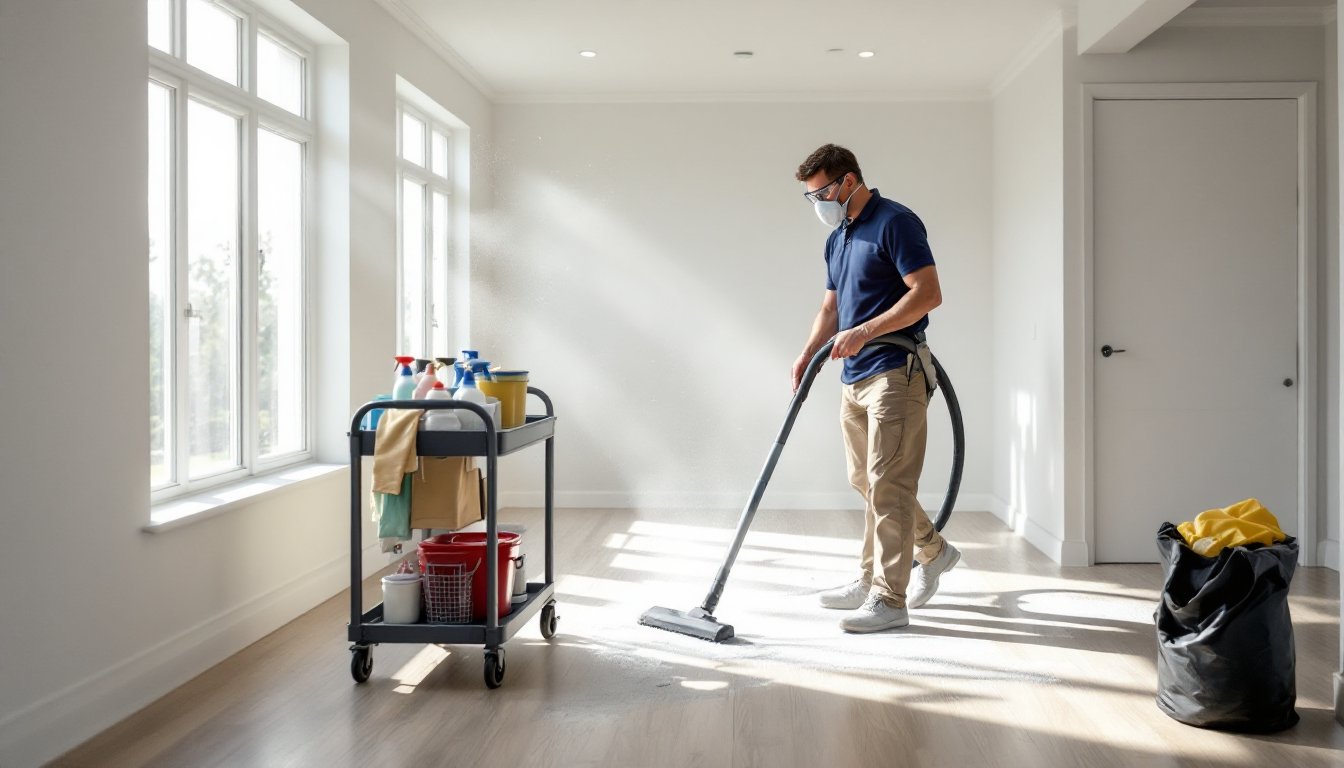
Sweep and vacuum floors. Sweep large debris into piles, then shop-vac everything. Pay attention to baseboards, door tracks, and corners. For tile or concrete, a push broom works faster than a standard broom.
-
Clean windows inside and out. Scrape off paint overspray, caulk, and adhesive with a plastic scraper (metal will scratch glass). Spray with glass cleaner and wipe with microfiber. Expect multiple passes, construction film is stubborn.
-
Wipe down surfaces. Use a damp microfiber cloth to wipe countertops, shelving, window sills, and door frames. Rinse the cloth frequently: construction dust turns to mud when wet.
Phase 2: Detail Clean
The detail clean brings the house to move-in condition. It’s slower, more precise work.
-
Wash walls and trim. Mix TSP or substitute per label directions (typically 1/4 cup per gallon of warm water). Wipe down walls, baseboards, and door casings with a sponge or cloth. Rinse with clean water to prevent residue. Wear gloves, TSP is caustic.
-
Deep-clean floors. For hardwood, use a pH-neutral wood cleaner and microfiber mop, never soak wood floors. For tile, mop with warm water and a mild detergent, then rinse. Grout lines may need scrubbing with a stiff brush. Luxury vinyl plank (LVP) and laminate should be cleaned per manufacturer specs to avoid voiding warranties.
-
Detail fixtures and hardware. Wipe down light switches, outlets, door handles, cabinet hardware, and plumbing fixtures. Use isopropyl alcohol for sticky adhesive residue. Polish stainless steel and chrome with a microfiber cloth.
-
Final vacuum and dust. Go over floors one last time with the shop vac, then switch to a standard vacuum if the space is clean enough. Dust window sills, shelves, and any horizontal surfaces that collected settling dust during earlier cleaning.
-
Check hidden spots. Open closets, cabinets, drawers, and appliance spaces. Vacuum and wipe interiors. Check inside medicine cabinets, pantry shelves, and under sinks.
-
Replace HVAC filter. Swap in a fresh filter after all cleaning is complete. Run the system for a few hours to circulate air, then check the filter again, it may need a second replacement if fine dust remains.
Safety Precautions During Post-Construction Cleanup
Post-construction cleanup carries real health and safety risks. Treat it like an active job site.
Respiratory protection is the top priority. Drywall dust, concrete particulate, and wood dust all pose inhalation hazards. An N95 respirator is the minimum: a P100 is better for heavy dust exposure. Bandanas and surgical masks don’t cut it.
Wear safety goggles, especially when scraping overhead or using chemical cleaners. Dust in the eyes isn’t just uncomfortable, it can scratch corneas.
Ventilate aggressively. Open windows and use box fans to create cross-ventilation. This reduces airborne dust and helps solvents or cleaning agents off-gas safely. If you’re using TSP or other strong cleaners, never mix products, combining cleaners can create toxic fumes.
Watch for sharp hazards: nails, screws, metal shavings, and broken tile edges. Wear closed-toe boots with puncture-resistant soles and heavy-duty gloves. Keep a first aid kit and fire extinguisher accessible.
If the project involved lead paint disturbance (common in pre-1978 homes), asbestos (older insulation, flooring, or popcorn ceilings), or mold remediation, do not attempt cleanup yourself. These require certified abatement and specialized disposal. Disturbing these materials without proper containment and PPE is illegal in many jurisdictions and dangerous.
Finally, dispose of construction waste properly. Many municipalities have specific requirements for drywall, treated lumber, and paint-contaminated materials. Check local regulations or hire a debris removal service.
When to DIY vs. Hire Professional Cleaners
For small projects, a bathroom remodel, a single room addition, DIY cleanup is manageable and cost-effective. Expect to spend 8–16 hours on a thorough two-phase clean for a typical 200–300 square foot space. You’ll need about $100–$200 in tools and supplies if starting from scratch, though a shop vac and basic cleaning agents cover most of it.
Hire professionals if:
- The project is large (whole-house renovation, new construction over 1,500 square feet). Professional crews work faster and have industrial equipment, truck-mounted vacuums, power scrubbers, and scaffolding for high work.
- Hazardous materials are involved. Lead, asbestos, mold, or biohazard cleanup requires licensed specialists. DIY is not an option.
- Time is tight. If you need the house ready for movers or a closing date, pros can turn a job site into a clean home in 1–2 days.
- You lack the tools. Renting or buying a quality shop vac, extension poles, and specialty cleaners adds up. For one-time use, paying a crew may cost less.
Professional post-construction cleaning typically runs $0.10–$0.50 per square foot, depending on the level of mess, regional labor rates, and accessibility. A 2,000-square-foot home might cost $200–$1,000. Get quotes from at least two companies and ask if they carry liability insurance, damage to new finishes during cleanup isn’t unheard of.
Some general contractors include a rough clean in their scope of work but not a detail clean. Clarify this in your contract upfront. If the GC’s crew does a rough clean, plan to handle (or hire out) the final detailing yourself. Many cleaning tips emphasize the importance of multiple passes and product-specific care, especially for high-end finishes.
Bottom line: DIY saves money and gives you control, but it’s hard, dusty work. If you’ve got the time, tools, and tolerance for grime, tackle it yourself. If not, a professional crew is worth every dollar.