
Finding affordable cleaning help doesn’t mean settling for shoddy work or shady operators. The $19 house cleaning market has exploded in recent years, driven by gig economy platforms, independent cleaners competing for reviews, and promotional offers designed to win first-time customers. But these rock-bottom prices come with trade-offs, limited scope, time caps, and varying levels of professionalism. Understanding what you’re actually getting, where to find legitimate services, and how to protect yourself from poor-quality work can turn a $19 gamble into a surprisingly solid deal.
Table of Contents
ToggleKey Takeaways
- $19 house cleaning services typically offer 60–90 minutes of surface-level work focused on high-traffic areas like kitchens and bathrooms, not whole-house deep cleans.
- Budget cleaning near you is most readily available through gig economy apps (TaskRabbit, Thumbtack, Care.com), Facebook Marketplace, and local classifieds, but watch for hidden booking fees and service charges.
- Vet budget cleaners carefully by checking verified reviews, asking about insurance and bonding, and staying home during the first appointment to ensure quality and protect valuables.
- Maximize your $19 cleaning value by decluttering beforehand, pre-soaking problem areas, prioritizing high-impact zones, and providing quality tools rather than worn-out equipment.
- Book recurring $19 cleaning sessions to negotiate better long-term rates and help cleaners learn your home’s specific needs for faster, more efficient future visits.
What Does $19 House Cleaning Actually Include?
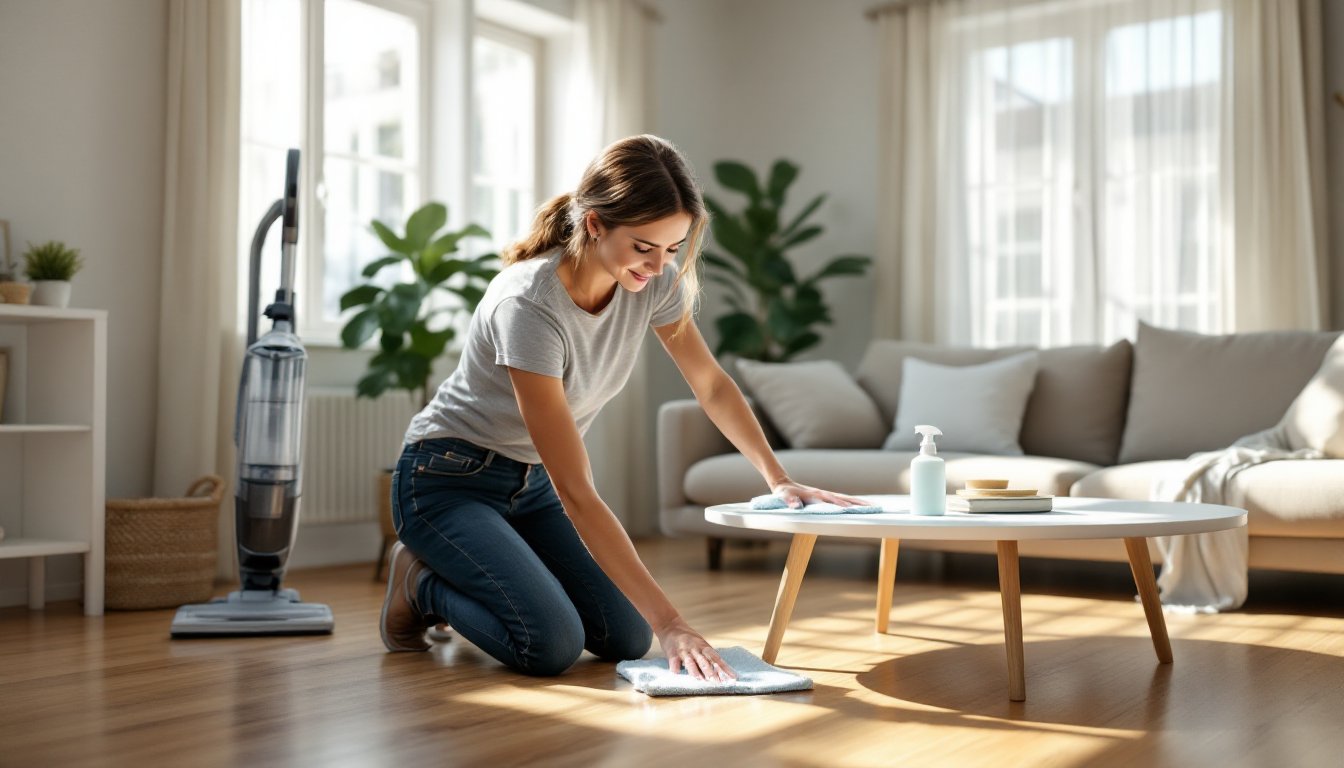
A $19 cleaning session is rarely a whole-house deep clean. Most budget services cap the session at 60 to 90 minutes and focus on high-traffic zones or single rooms. Expect surface-level work: vacuuming, dusting visible areas, wiping down countertops, and spot-mopping floors.
Typical inclusions:
- Kitchen: Counter wipes, sink scrub, exterior appliance cleaning, trash removal
- Bathroom: Toilet bowl, sink, mirror, and quick floor mop
- Living areas: Vacuuming carpets, dusting flat surfaces, straightening cushions
- Bedrooms: Basic tidying, bed making if linens are already on the bed
What’s usually not included:
- Deep scrubbing (grout, baseboards, inside ovens or refrigerators)
- Window washing (interior or exterior)
- Laundry or dishes
- Organizing or decluttering (the cleaner won’t sort your mail or put away kids’ toys)
- Specialty tasks like carpet shampooing, upholstery cleaning, or moving furniture
Some services market the $19 rate as an introductory offer for first-time customers, after which the rate jumps to $30–$50 per hour. Others use it as a per-room rate, meaning a three-bedroom home could actually cost $57 before you even start. Read the fine print carefully, some platforms tack on booking fees, same-day premiums, or supply charges if you don’t provide your own cleaning products.
If the cleaner finishes in 45 minutes, that’s often by design. The pricing model assumes high volume and quick turnover, not meticulous attention to detail. For context, professional house cleaning services in major metros typically range from $90 to $180 for a standard whole-home clean, so $19 is a fraction of that, and the scope reflects it.
Where to Find $19 House Cleaning Services Near You
Online Platforms and Apps
Gig economy apps are the most common source for ultra-budget cleaning. Platforms like TaskRabbit, Thumbtack, Handy, and Care.com let independent cleaners set their own rates, and promotional pricing often lands in the $15–$25 range for short sessions.
How it works:
- Enter your ZIP code and describe the job (one room, quick tidy, move-out touch-up, etc.)
- Review cleaner profiles, ratings, and hourly or flat rates
- Book directly through the app: payment and scheduling are handled in-platform
- Cleaners bring their own supplies or you specify that you’ll provide them
Watch for platform fees. A $19 cleaner rate may become $24 after a service charge. Some apps also require you to tip separately, which isn’t always disclosed upfront.
Facebook Marketplace and Nextdoor have exploded with solo cleaners advertising flat-rate specials. These are often new cleaners building a client base or established pros offering weekday-afternoon slots they struggle to fill. You’re dealing directly with the cleaner, so there’s no platform mediation if something goes wrong, but you also skip the booking fees.
Local Classifieds and Community Groups
Craigslist remains a surprisingly active marketplace for budget cleaning services, especially in college towns and metro suburbs. Search “house cleaning” under the “services” section and filter by price or keyword. Many posts advertise flat rates per room or hourly minimums.
Safety notes for Craigslist hires:
- Request references or before/after photos of previous work
- Meet the cleaner briefly before handing over house keys
- Pay after the work is done, not upfront (even though what they may request)
- Avoid anyone asking for wire transfers, gift cards, or deposits via payment apps
Church bulletin boards, community centers, and local neighborhood groups sometimes post flyers for cleaners offering discounted rates to seniors, single parents, or repeat customers. These tend to be word-of-mouth operations, lower tech, but often more accountable because reputation is everything in a tight-knit community.
Another option: local cleaning companies’ promotional offers. Many small businesses run “first clean for $19” deals to win long-term clients. The catch? They’ll push hard for a recurring service contract, and the rate only applies if you sign up for biweekly or monthly visits.
How to Vet Budget Cleaning Services for Quality and Safety
Cheap rates attract both hardworking independents and fly-by-night operators. A little due diligence goes a long way.
Check reviews and ratings, but read between the lines. A cleaner with 200 five-star reviews on TaskRabbit is a safer bet than someone with three glowing testimonials on Facebook. Look for patterns in complaints: repeated mentions of no-shows, rushed work, or damaged belongings are red flags.
Ask about insurance and bonding. Legitimate cleaning services (even solo operators) should carry general liability insurance to cover accidental damage (a broken vase, a scratched floor). Bonding protects you if the cleaner steals something. Most $19-per-session gig workers won’t have bonding, but asking the question helps you gauge professionalism.
Verify they bring their own supplies, or confirm what you need to provide. Budget cleaners sometimes expect you to supply everything from paper towels to a vacuum. If you’re providing gear, make sure it’s in working order. A clogged vacuum or a mop with a broken handle wastes time and delivers poor results.
Do a walk-through before they start. Point out priorities: “Focus on the kitchen and bathroom: the bedrooms can wait.” This prevents misunderstandings and ensures the limited time is spent where you want it.
Secure valuables and medications. Even with a vetted cleaner, it’s smart practice to lock up jewelry, prescription drugs, and important documents. Temptation is real, and you’re inviting a stranger into your home.
Stay home the first time, if possible. You don’t need to hover, but being present lets you observe their process, answer questions, and step in if something seems off. It also discourages theft or corner-cutting.
Trusted platforms like Good Housekeeping often publish vetted lists of cleaning services and products, which can help you cross-reference names or identify reputable companies expanding into budget tiers.
Maximizing Value from Your $19 Cleaning Session
With 60–90 minutes on the clock, preparation is everything.
Declutter before they arrive. A cleaner can’t vacuum a floor covered in toys, mail, and shoes. Pick up the surface mess yourself: let them focus on actual cleaning.
Pre-soak problem areas. Spray down the shower, toilet, and stovetop with cleaner 15 minutes before they arrive. This gives products time to break down grime, making the cleaner’s scrubbing faster and more effective.
Prioritize high-impact zones. A sparkling kitchen and bathroom make the whole house feel cleaner, even if the living room only gets a quick vacuum. Communicate this upfront.
Provide quality tools. If you’re supplying the vacuum, mop, and cleaning solutions, don’t hand over a 10-year-old vacuum with no suction and a generic all-purpose spray. Good tools let a cleaner work faster and better. A microfiber mop head, a working vacuum with a HEPA filter, and a decent multi-surface cleaner (like diluted Simple Green or a brand-name spray) make a measurable difference.
Set a timer expectation. If the service is marketed as 90 minutes, confirm that in writing. Some cleaners interpret “quick clean” as 45 minutes and bolt. Clarifying upfront prevents frustration.
Tip appropriately. $19 is a basement rate. If the cleaner does solid work, a $5–$10 tip (25–50% of the service cost) is fair and encourages them to prioritize you for future bookings. Gig workers remember good tippers.
Book recurring visits for better rates. Many budget cleaners offer discounts if you commit to weekly or biweekly service. A $19 one-time rate might drop to $16 per session with a monthly contract, and the cleaner will learn your home’s quirks, speeding up future sessions.
Conclusion
$19 house cleaning isn’t a miracle, it’s a trade-off. You’re buying an hour of focused work, not a white-glove deep clean. But with smart vetting, clear communication, and realistic expectations, these budget services can be a practical stopgap between bigger cleaning sessions or a manageable way to tackle high-traffic areas without very costly. Treat it as a tool in your home maintenance toolkit, not a replacement for regular upkeep, and it’ll deliver solid value.