The best home organization starts with a simple truth: clutter creates chaos, and chaos drains energy. A well-organized home saves time, reduces stress, and makes daily routines smoother. Whether someone lives in a small apartment or a sprawling house, smart organization strategies can transform any space into a functional, peaceful environment.
This guide covers proven decluttering methods, room-specific tips, storage solutions, and habit-building techniques. Readers will find practical ideas they can carry out today, no expensive renovations or professional organizers required.
Table of Contents
ToggleKey Takeaways
- The best home organization starts with decluttering using methods like the Four-Box Method, One-In-One-Out Rule, or the 90/90 Rule to reduce excess belongings.
- Organize rooms by grouping items by function and using clear containers, drawer dividers, and vertical storage to maximize space.
- Smart storage solutions like baskets, multi-functional furniture, and wall-mounted shelves make organization sustainable without expensive investments.
- Build lasting habits with a daily 10-minute reset, weekly reviews, and one-touch handling to prevent clutter from accumulating.
- Give every item a designated home to eliminate decision fatigue and make tidying up automatic.
- Schedule seasonal purges throughout the year to keep possessions manageable and avoid overwhelming organizing projects.
Decluttering Strategies That Actually Work
Effective home organization begins with decluttering. Most people own far more than they need or use. Studies suggest the average American home contains over 300,000 items. That’s a lot of stuff competing for space and attention.
The Four-Box Method offers a straightforward approach. Label four boxes: Keep, Donate, Trash, and Relocate. Pick one area, a drawer, a shelf, a closet, and sort every item into these categories. No item gets put back without a decision. This method forces quick choices and prevents the endless shuffle of belongings from one spot to another.
Another popular technique is the One-In-One-Out Rule. For every new item that enters the home, one item must leave. This simple boundary prevents accumulation and keeps possessions at a manageable level.
The 90/90 Rule works well for those who struggle with “maybe” items. If something hasn’t been used in the last 90 days and won’t be used in the next 90, it goes. Seasonal items get reasonable exceptions, but that dusty bread maker collecting cobwebs? It’s time to let go.
Decluttering isn’t a one-time event. The best home organization systems include regular purging sessions, monthly mini-cleanouts prevent small messes from becoming overwhelming projects.
Room-by-Room Organization Tips
Different rooms present different challenges. A targeted approach works better than generic advice.
Kitchen and Pantry
Kitchens see heavy daily use, making organization crucial. Start by grouping items by function: baking supplies together, everyday dishes within easy reach, rarely-used appliances stored high or low.
Clear containers transform pantry chaos into visual order. They show exactly what’s available and how much remains. Labels add another layer of clarity. Zone organization works well here, breakfast items in one area, snacks in another, dinner ingredients grouped together.
Drawer dividers separate utensils and prevent the dreaded junk drawer from spreading. Vertical storage, shelf risers, door-mounted racks, and stackable bins, maximizes cabinet space. The inside of cabinet doors offers prime real estate for measuring cups, pot lids, or spice racks.
Closets and Bedrooms
Closet organization follows the same principle: group like items and make everything visible. The best home organization experts recommend sorting clothes by category first (shirts, pants, dresses), then by color within each category.
Slim velvet hangers save significant space compared to bulky plastic ones. Shelf dividers keep folded items from toppling into each other. Clear shoe boxes or over-door organizers keep footwear accessible and protected.
Bedroom nightstands benefit from small trays or drawer organizers. These contain the small items, phone chargers, lip balm, books, that otherwise scatter across surfaces. Under-bed storage containers capture dead space for seasonal clothing, extra bedding, or luggage.
Essential Storage Solutions for Every Home
Smart storage solutions make home organization sustainable. The right products don’t just hide clutter, they create systems that maintain themselves.
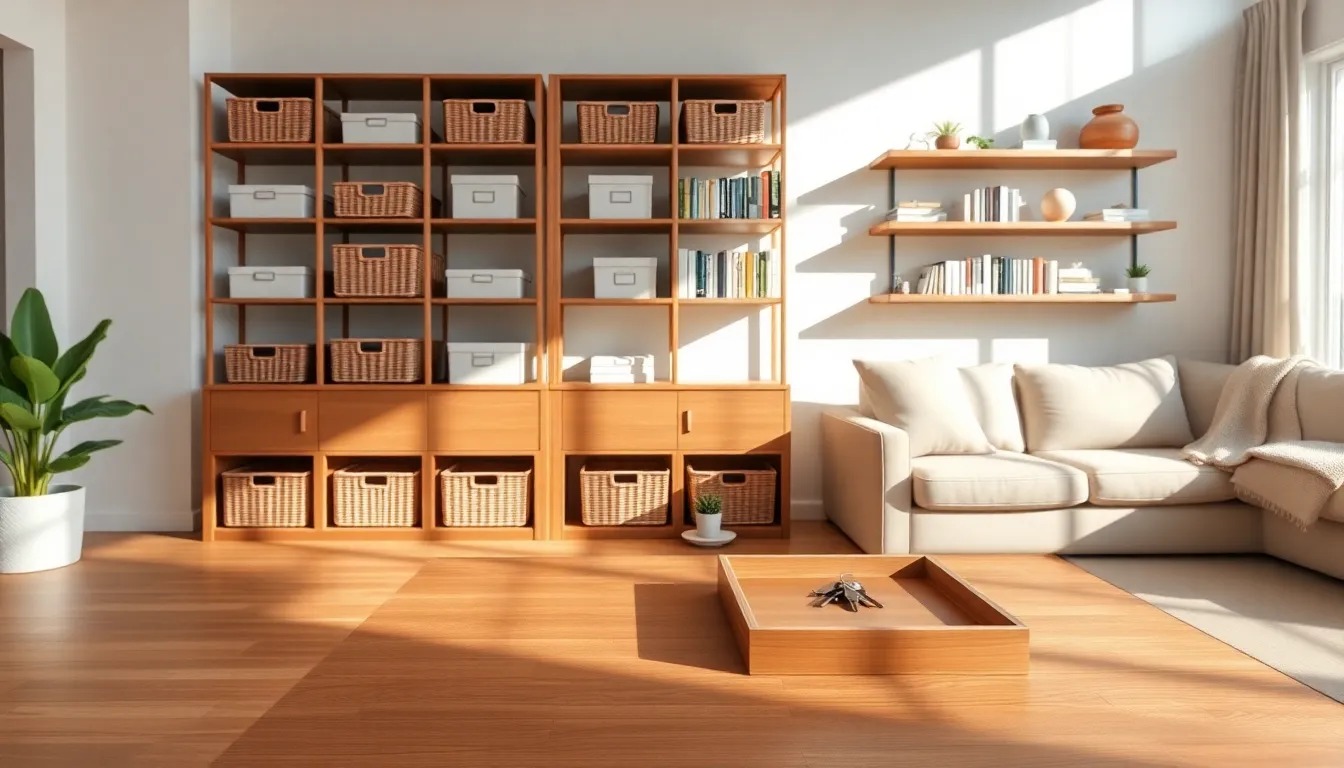
Baskets and bins remain organization workhorses. They corral loose items, fit on shelves or in closets, and look presentable when visible. Woven baskets add warmth to living rooms while containing blankets, magazines, or toys. Clear plastic bins work better for closets and garages where quick identification matters.
Vertical space often goes underutilized. Wall-mounted shelves, pegboards, and hooks turn empty walls into functional storage. A pegboard in a garage or craft room holds tools and supplies at eye level. Floating shelves in bathrooms store toiletries without consuming floor space.
Multi-functional furniture serves double duty in smaller homes. Ottomans with hidden storage hold blankets and games. Bed frames with built-in drawers eliminate the need for separate dressers. Entry benches with shoe storage below and hooks above create organized landing zones.
Drawer organizers transform chaotic drawers into efficient compartments. They work in kitchens, bathrooms, offices, and bedrooms. Adjustable versions fit various drawer sizes.
The best home organization investment often isn’t the most expensive. Dollar stores carry basic bins and dividers. Repurposed items, mason jars for bathroom storage, shoebox lids for drawer dividers, work just as well as specialty products.
Building Long-Term Organization Habits
Organization systems fail without maintenance habits. The best home organization approach includes daily and weekly routines that prevent buildup.
The 10-minute reset makes a significant difference. Spending just ten minutes each evening returning items to their designated spots keeps small messes from growing. This habit takes minimal effort but yields major results.
Weekly reviews catch problems early. A quick walk-through reveals areas sliding toward chaos. Maybe the mail pile has grown. Perhaps the kids’ toy bin has overflowed. Addressing these weekly prevents weekend-long organizing marathons.
One-touch handling reduces clutter at the source. When picking up mail, sort it immediately, recycling, action needed, or file. When removing clothes, hang them up or put them in the hamper. Don’t set items down “for now.” That “for now” often becomes permanent.
Designated homes for every item eliminate decision fatigue. Keys go on the hook. Remote controls live in the basket. Scissors return to the drawer. When everything has a place, putting things away becomes automatic.
Seasonal purges keep possessions in check. Each season, evaluate one major area, closets in spring, garage in summer, pantry in fall, holiday decorations in winter. This spreads the work throughout the year and prevents overwhelming accumulation.